TL;DR / Executive Summary
- Seraphim portfolio company Hubble Network has raised a $200 million Series C round, reaching a $1.6 billion valuation, becoming the latest unicorn in Seraphim’s portfolio.
- Any Bluetooth Low Energy device can now connect to Hubble’s satellite network through a firmware update, without requiring dedicated satellite hardware.
- The network already supports more than 500,000 devices and combines satellite coverage with over 100 million terrestrial gateways across 170 countries.
- Lower-cost satellite connectivity could enable item-level tracking and monitoring at a scale that was previously too expensive for most supply chains and asset owners.

Hubble Network has announced the opening of its satellite network to the public, making it possible for any Bluetooth device to connect directly to orbit. The company also announced a $200 million Series C round led by Smith Point Capital, with participation from Seraphim, Carthona Capital, Earthshot Ventures, Y Combinator, and RPM Ventures, bringing Hubble’s total funding to $300 million and valuing the company at $1.6 billion.
“When we said we’d connect Bluetooth chips to satellites, most of the industry said the physics wouldn’t allow it,” said Alex Haro, CEO and co-founder of Hubble Network. “Today we’re turning that early skepticism into a global opportunity. Alongside our partners and investors who believe in our vision, we’re poised to take the next big leap toward a global satellite network that delivers affordable, low-power, ubiquitous connectivity for billions of devices.”
A New Era of IoT at Planetary Scale
Cellular networks reach about 15% of the Earth’s landmass. Tracking anything beyond that has required dedicated satellite hardware, $25 or more per device, leaving only the highest-valued assets worth tracking. The rest go untracked, and asset theft and loss cost the average mid-sized business $13 million per year. Hubble turns the Bluetooth LE radio already inside a device into a global beacon with a firmware update and no new hardware. For new designs, connectivity adds under 50 cents to the bill of materials, roughly 10x less than a cellular modem and 50x less than a satellite one.
Early satellite access was limited to a few pilot customers. Now any company on Hubble’s Terrestrial Network can extend to satellite coverage with a simple firmware update, and new customers can register an off-the-shelf development kit in the Hubble dashboard and see data flowing in minutes.
Samsara (NYSE: IOT), one of Hubble’s pilot customers, is working to bring its satellite network to real-world physical operations. “Our customers work on the frontlines in some of the most remote parts of the world, where reliable connectivity can be hard to come by,” said David Gal, VP of Product and Engineering, Connected Equipment at Samsara. “Hubble gives us a way to extend visibility beyond the reach of traditional networks without adding new hardware — helping operators stay connected to critical equipment wherever the job takes them.”
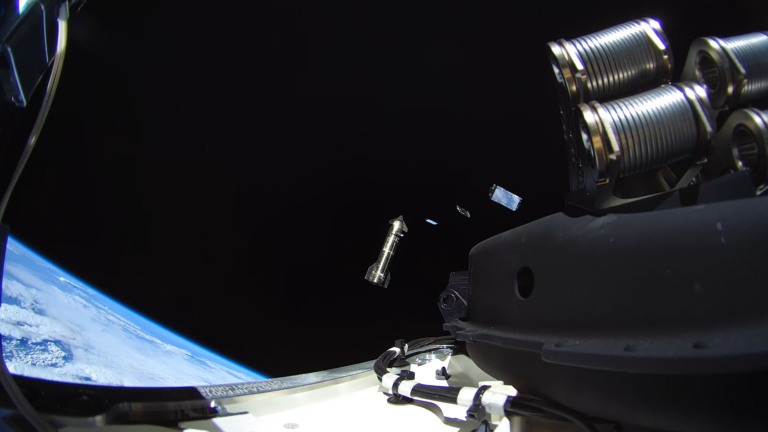
Hubble operates six satellites in low Earth orbit today and is on track to reach 60 by 2030. Its Terrestrial Network spans more than 100 million gateways across 170 countries and 3 million square miles of coverage. More than 500,000 devices are currently active on the network, more than 10 times the number a year ago.
“Until now, the cost and complexity of connectivity limited visibility to only the most valuable assets,” said Keith Block, Founder and CEO of Smith Point Capital. “Hubble Network has built the foundational infrastructure that the physical world is missing: a global network extending Bluetooth-to-satellite reach to provide comprehensive tracking and status monitoring for virtually any asset worldwide, and creating new business models for mission-critical verticals. Alex, Ben, and the team have the technical vision and operational focus to not only build an enduring, industry-leading business but to define a new global standard for how the physical world is connected, managed, and understood.”
The latest round follows Hubble’s $70M Series B raise in 2025. Over the last year, Hubble has formed partnerships with Texas Instruments to allow customers to transmit location and sensor data without gateways, GPS, or cellular, and with InPlay, which paired the sub-$1 chip with Hubble’s gateways to deliver item-level tracking at a cost that rivals passive RFID. Smart-label maker Reelables partnered with Hubble, connecting printable smart labels to the network to extend cargo visibility, and Hubble has signed its first customer contract with Muon Space for larger next-generation satellites on its MuSat XL platform.
Founded by Alex Haro, who took Life360 public, and Ben Wild, who invented and led product for Amazon Sidewalk, Hubble is focused on scaling the constellation toward continuous global coverage, while lowering the cost of connectivity to make it possible to track any item on Earth, not just expensive assets.