TL;DR / Executive Summary
- Six companies from the Seraphim ecosystem launched payloads on SpaceX’s Transporter-16 rideshare mission from Vandenberg on 30 March.
- Portfolio companies ICEYE, HawkEye 360, D-Orbit and SatVu deployed satellites spanning SAR imaging, RF intelligence, space logistics and thermal sensing.
- Accelerator graduates Astrolight and CisLunar Industries reached orbit with laser communications and power processing technology, marking key milestones for both.
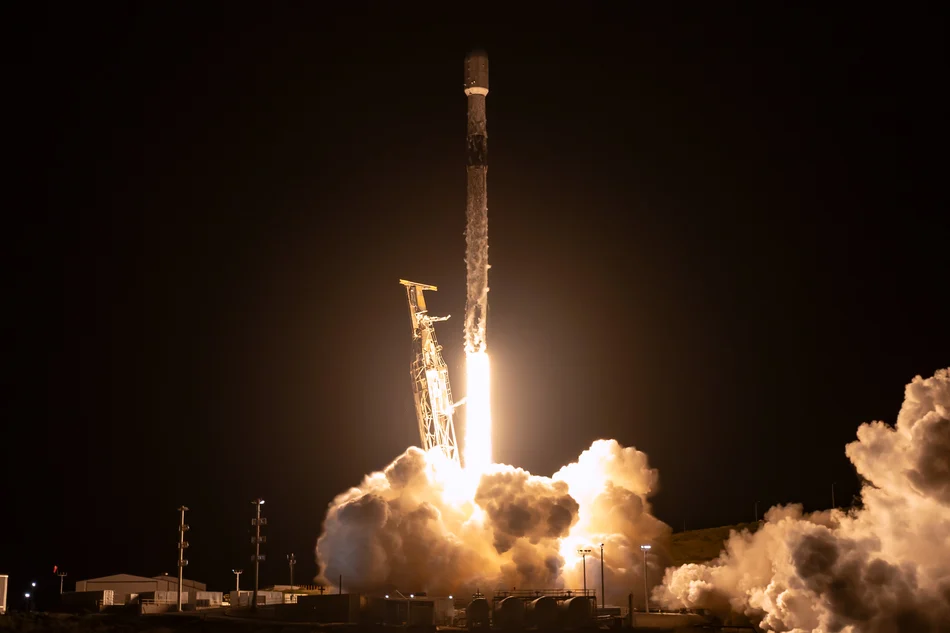
[Credit: SpaceX]
On March 30, SpaceX’s Transporter-16 rideshare mission lifted off from Vandenberg Space Force Base, carrying payloads from across the Seraphim family. Four fund portfolio companies and two Accelerator alumni on a single launch, all building the space infrastructure of tomorrow.
Seraphim Portfolio
ICEYE
ICEYE deployed six new SAR satellites, expanding both its commercial constellation and dedicated sovereign missions for the Polish Armed Forces and Portugal’s Atlantic Constellation initiative. ICEYE has now launched 70 satellites since 2018, with eight in orbit already this year, and is scaling to a production rate of one satellite per week in 2026.
ICEYE’s SAR (Synthetic Aperture Radar) satellites use radar pulses to image the Earth’s surface day or night, through cloud, smoke, and darkness, delivering persistent surveillance where traditional optical satellites cannot.

HawkEye 360
HawkEye 360 launched Cluster 14, further expanding the world’s leading commercial RF signal intelligence constellation. The new satellites support growing customer missions across defence, maritime, and national security, with upgraded onboard processing to accelerate data delivery.
HawkEye 360’s platform detects and geolocates radio frequency emissions across communications, navigation, and radar sources, combining proprietary signal processing with AI-powered analytics to deliver actionable intelligence to government and allied customers.

D-Orbit
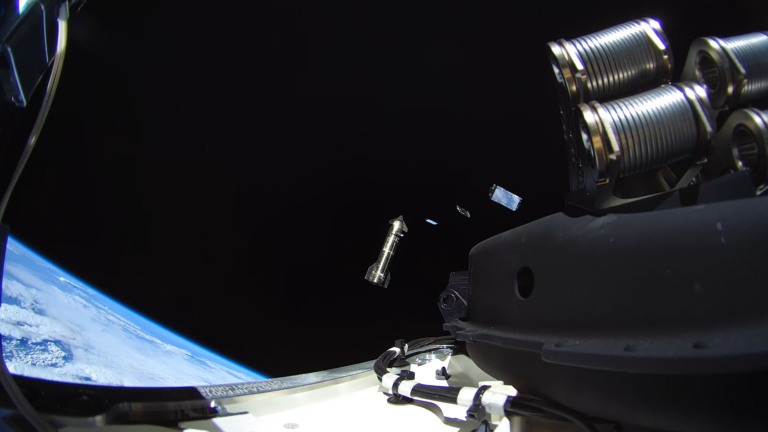
D-Orbit flew Wayfinder, its 22nd commercial ION Satellite Carrier mission, deploying satellites into operational orbits while hosting payloads for in-orbit testing. D-Orbit has now delivered more than 220 payloads to orbit since 2020, cementing its position as a go-to partner for satellite deployment and space logistics.

[Credit: SpaceX]
SatVu
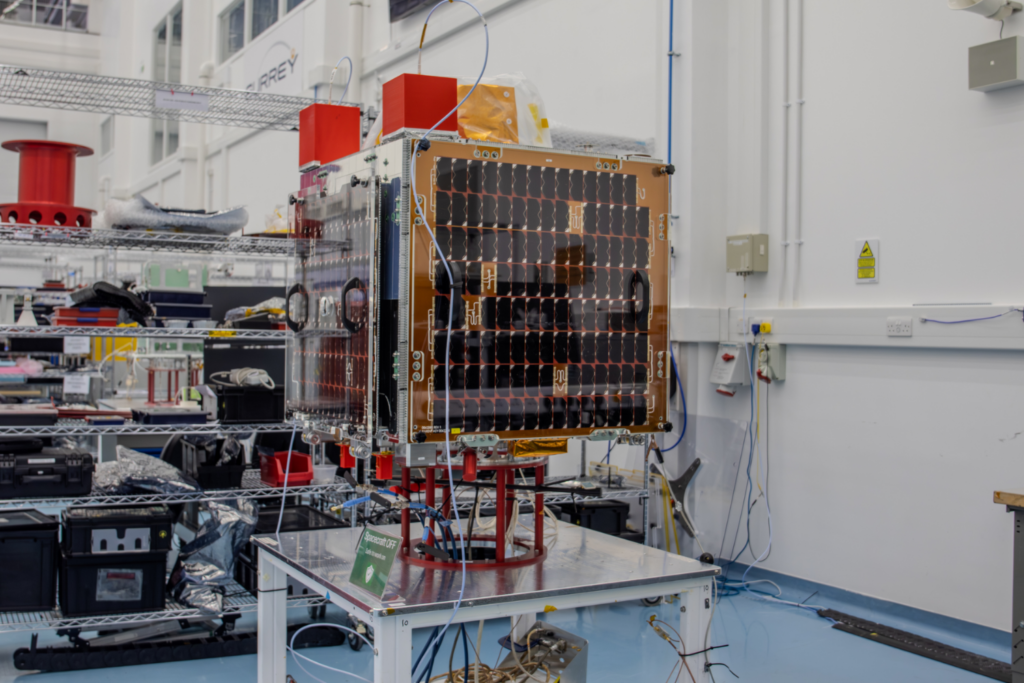
SatVu launched HotSat-2, returning to orbit with a capability no other commercial operator provides. Using mid-wave infrared sensors, HotSat-2 delivers very high-resolution thermal imaging that reveals what is operational on the ground, day or night. While optical and radar satellites show what is there, SatVu shows what is active. HotSat-3 is already in production for launch later this year, scaling a constellation with direct applications across national security, climate resilience, and economic intelligence.
Seraphim Accelerator
Astrolight
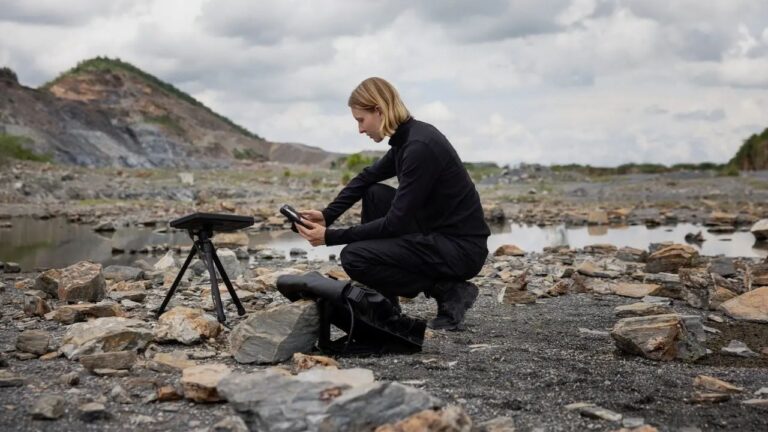
Astrolight reached orbit for the first time, launching three ATLAS-1 laser communication terminals aboard Transporter-16. ATLAS-1 is a compact laser communication terminal that enables satellites to transmit data back to Earth using focused beams of infrared light rather than traditional radio frequencies.
CisLunar Industries
CisLunar Industries flew its EPIC power processing technology on its third space mission, funded by NASA’s Flight Opportunities programme. EPIC transforms power across 1 to 100 kilowatts at greater than 95% efficiency in smaller, lighter, more resilient architectures, a critical enabler for electric propulsion, in-space servicing, and dynamic space operations.
The Bigger Picture
Six companies. One launch. The space infrastructure of tomorrow is being built today, and the Seraphim ecosystem is at the centre.