TL;DR / Executive Summary
- Seraphim portfolio company [1] Voyager has secured a mission management contract with Sandia National Laboratories, supporting a 2027 national security research mission aboard the International Space Station.
- [2] Geisinger has become the first major clinical and life sciences partner for VISTA (Voyager Institute for Space, Technology and Advancement), expanding research into microgravity-enabled healthcare and biopharma applications.
- [3] Penn State has also joined the VISTA ecosystem, strengthening research, workforce development and national security innovation across Pennsylvania’s growing space sector.
[1] Voyager Technologies (NYSE: VOYG) was awarded a new mission management contract with Sandia National Laboratories to fly their Big Boy demonstration aboard the International Space Station in 2027. The contract underscores the continued and growing demand for access to low-Earth orbit for national security research, with additional contracts expected to follow.
“Our station-agnostic, integrated approach to mission management enables space access for everyone from academia and government agencies to civil, commercial and defense industries,” said Matt Magaña, president of Space, Defense and National Security, Voyager. “Supporting Sandia National Labs through every phase of execution from Earth to orbit is another proof point for how we are making America’s presence in space durable, commercially viable and strategically strong.”
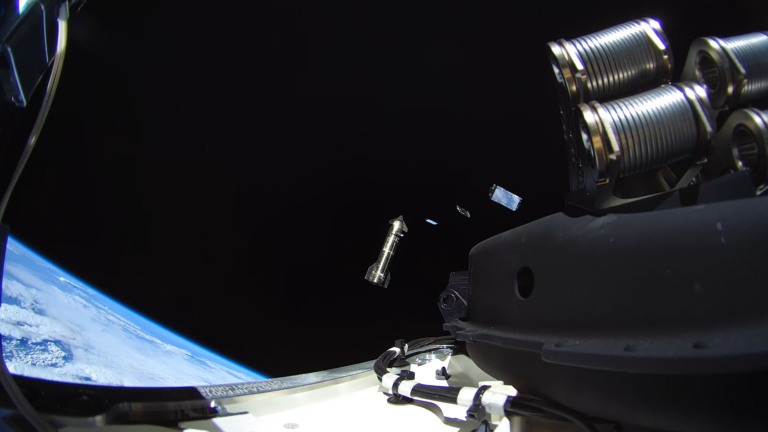
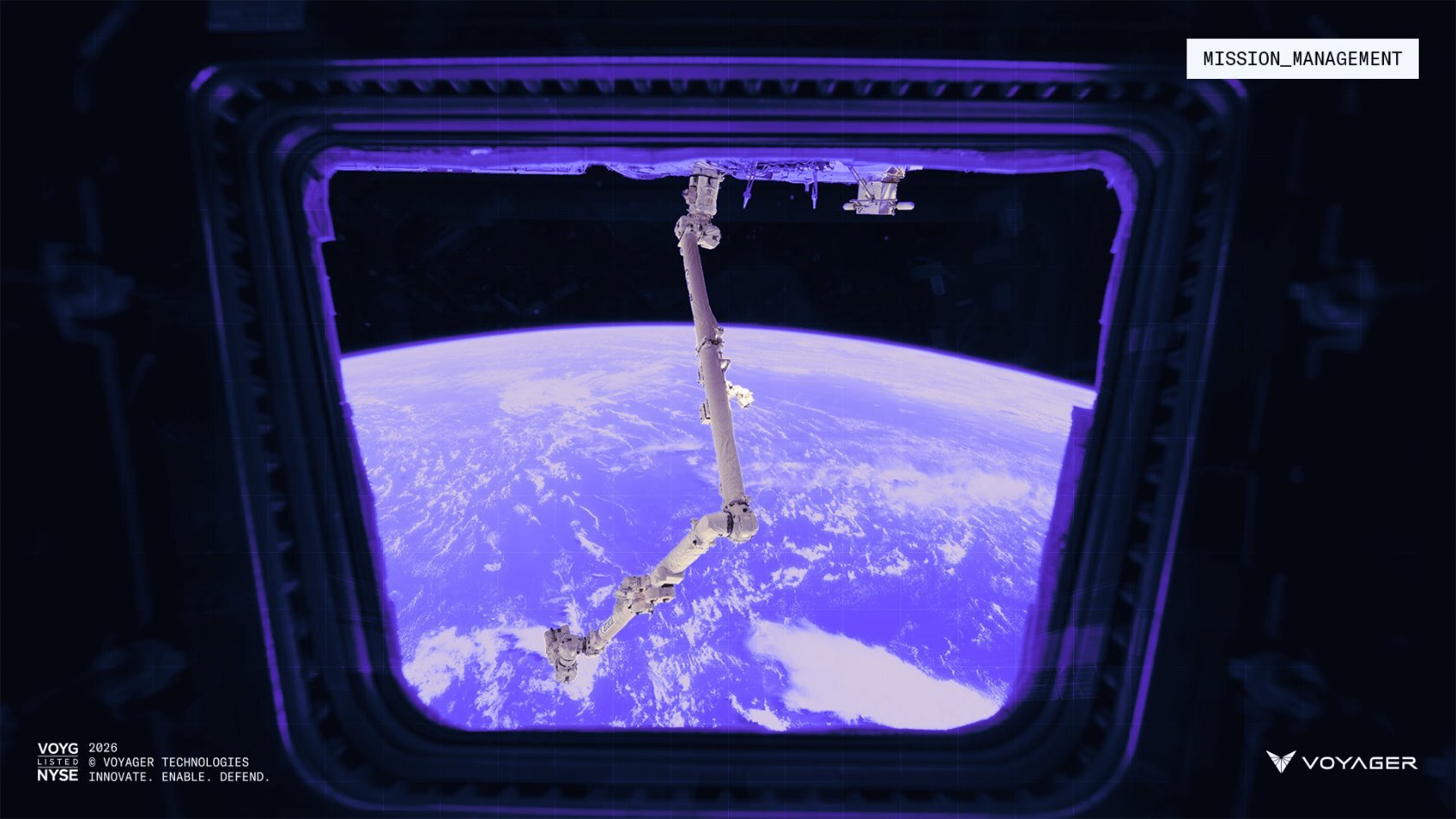
Under the contract, Voyager will provide end-to-end mission management, including experiment design, payload integration, safety review, manifest and mission planning, and on-orbit operations. The payload will integrate with the company’s NEL, an external payload platform mountable on Voyager’s Bishop Airlock, the first and only permanent commercially owned module on the Space Station.
The first NEL platform will fly to the Space Station aboard Japan Aerospace Exploration Agency’s HTV-X2. A second NEL platform will follow in the spring of 2027 to meet growing customer demand.
Based in New Mexico, Sandia National Labs is a multi-mission laboratory with the primary goal of advancing U.S. national security through science-based technology development. The Big Boy demonstration and validation mission will validate on-orbit operations of parallel sensors that will improve understanding of lightning emissions and signals, the natural radiation environment, and sensor and optics degradation when exposed to launch, vacuum and reentry forces.
Learn more: https://voyagertechnologies.com/press-releases/voyager-wins-contract-with-sandia-national-laboratories/

[2] Voyager Technologies has secured Geisinger, one of the largest integrated health systems in the United States, as a Voyager Institute for Space, Technology and Advancement (VISTA) partner. The memorandum of understanding (MOU) marks a significant expansion of VISTA’s reach into the life sciences and biopharma sector, establishing a framework for joint research programs that translate the unique conditions of microgravity into breakthrough pathways for human health.
“Signing a health system of Geisinger’s caliber is a defining moment for VISTA,” said John Baum, chief strategy and marketing officer, Voyager. “Microgravity enables research that simply isn’t possible on Earth, and that opens real doors for cancer treatment, therapies for diseases and next-gen treatments at a scale the biopharma and life sciences world is paying close attention to. Geisinger has the clinical depth and scientific rigor to carry that research all the way to patient care, and their decision to collaborate with VISTA is a signal to the entire industry.”
Under the MOU, Voyager and Geisinger will pursue shared programs and seek external funding to support further technological development. Voyager and Geisinger will jointly pursue up to $1 million in external funding for research opportunities that leverage microgravity to advance clinical and biomedical initiatives. The agreement provides reserved research resources, tenant access, payload development support through Starlab and other commercial space infrastructure, and collaboration within the VISTA ecosystem. Focus areas span translational pathways for space-based drug development, remote patient monitoring and telehealth, next-generation cybersecurity health platforms, multi-omics and biological effects of spaceflight, and clinical trial opportunities uniquely enabled by microgravity.
VISTA is the first-of-its-kind U.S. science park dedicated to in-space research, manufacturing and services, anchored at The Ohio State University. Its network has expanded rapidly over the past year with universities and commercial tenants, with momentum building across domestic and international markets. With access to the International Space Station and future commercial space platforms, VISTA tenants can develop next-generation technologies and services across civil, commercial and national security markets. For more information, visit vistaspacepark.com.
Learn more: https://voyagertechnologies.com/press-releases/voyager-secures-geisinger-partnership/

[3] Voyager Technologies signed a memorandum of understanding (MOU) with The Pennsylvania State University, expanding the Voyager Institute for Space, Technology and Advancement (VISTA) ecosystem. The collaboration will develop joint research programs and applications across in-space research and manufacturing and national security, fusing commercial innovation with defense mission expertise.
“This announcement is the latest in a series of strategic initiatives that tell a larger story, establishing Pennsylvania as an emerging cluster spanning aerospace manufacturing, clinical research and national security innovation for our company,” said John Baum, chief strategy and marketing officer, Voyager. “We have lunar manufacturing in Pittsburgh, life sciences research anchored by one of the country’s largest health systems, and now, a world-class research university.”
Under the MOU, Voyager and Penn State will pursue shared programs and seek external funding to support further technological development. The agreement provides reserved research resources, tenant opportunities and collaboration within the VISTA ecosystem, positioning the university alongside Fortune 500 companies, startups and government agencies, while building the space economy workforce and strengthening VISTA’s capabilities. It also reflects a shared interest in advancing defense and national security technologies across contested domains, including solid controllable propulsion, satellite communications, guidance, navigation and control, and signals intelligence.
Penn State joins a VISTA network that has expanded rapidly over the past year, with momentum building across domestic and international markets. Anchored at The Ohio State University, VISTA includes NASA Glenn Research Center, the University of Connecticut and the University of North Dakota, alongside international partners Óbuda University in Budapest, Hungary, and Yonsei University in Seoul, South Korea, plus a growing roster of commercial tenants. As that interest accelerates, Voyager continues to welcome new tenants to the science park.
VISTA is the first-of-its-kind U.S. science park dedicated to in-space research, manufacturing and services, located on the campus of The Ohio State University. With access to the International Space Station and future commercial space platforms, VISTA tenants develop next-generation technologies and services across civil, commercial and national security markets. For more information, visit vistaspacepark.com.